Tesla Autopilot Lawsuits — Who Is Liable in Self-Driving Crashes?
A legal analysis of product liability, driver responsibility, and the evolving law of automated vehicles
Tesla’s Autopilot and Full Self-Driving (FSD) features are among the most recognizable advanced driver-assistance systems on the road today. They are also among the most heavily litigated. As more vehicles operate with partial automation, courts and juries are being asked to answer a question that the law has never had to address at this scale: when a car equipped with self-driving technology is involved in a crash, who is legally responsible?
That question has moved from theoretical to urgent. In 2025, a federal jury in Florida returned one of the largest product liability verdicts ever issued against an automaker, finding Tesla partially responsible for a fatal Autopilot-involved crash. Federal regulators have opened multiple investigations into Tesla’s automated driving features, and a growing number of plaintiffs’ firms are bringing cases that allege defective design, inadequate driver monitoring, and misleading marketing. The legal landscape is still forming, and the outcomes of these cases will shape how liability works for autonomous vehicle technology for decades to come.
This article explains how Tesla Autopilot lawsuits work, who can be held liable in a self-driving crash, what the major cases have established so far, and what consumers, drivers, and victims should understand about this rapidly evolving area of law.
What Is Tesla Autopilot?
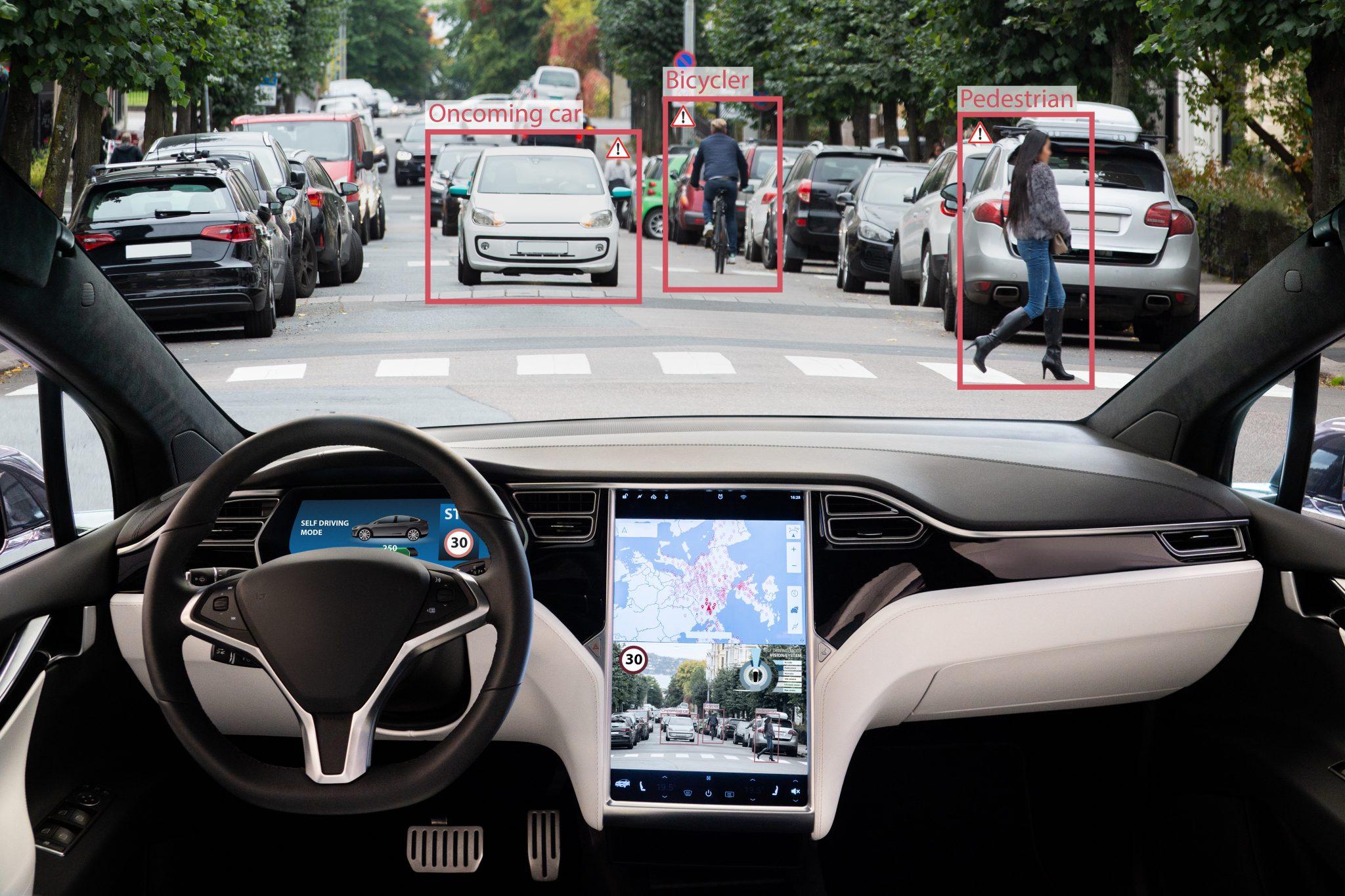
Tesla Autopilot is a suite of driver-assistance features built into Tesla vehicles. Standard Autopilot includes traffic-aware cruise control and automatic lane-keeping. Enhanced Autopilot and Full Self-Driving (FSD) add features such as automatic lane changes, navigation on highways, automated parking, and the ability to follow turn-by-turn routes on city streets.
Despite the marketing terminology, Tesla’s systems are not fully autonomous. Federal regulators classify both Autopilot and FSD as SAE Level 2 partial automation. That classification matters legally, because Level 2 means the human driver remains responsible for monitoring the vehicle and the road at all times, and must be ready to take control instantly. The system is designed to support the driver, not replace the driver.
This distinction is at the center of nearly every Autopilot lawsuit. Tesla has consistently argued that drivers are warned to keep their eyes on the road and their hands on the wheel, and that the system is not designed to operate without supervision. Plaintiffs counter that the names “Autopilot” and “Full Self-Driving,” combined with public statements from Tesla executives, encouraged drivers to trust the system in conditions where it could not safely be trusted. Courts have generally treated drivers as legally responsible because Tesla vehicles are not fully autonomous, but recent verdicts show that responsibility can be shared with the manufacturer when the system itself is found to have contributed to a crash.
Why Tesla Is Facing Autopilot Lawsuits
Tesla faces a wave of lawsuits tied to crashes involving Autopilot and Full Self-Driving. While each case has its own facts, the legal theories tend to fall into a recognizable pattern. Plaintiffs typically argue that the technology itself, the way it was marketed, or both, played a meaningful role in the crash.
Common allegations in Tesla Autopilot lawsuits include:
- Defective design — that Autopilot or FSD was engineered in a way that allowed the system to be activated in conditions it was not equipped to handle, such as on roads outside its intended operational design domain.
- Inadequate driver monitoring — that Tesla’s reliance on steering torque sensors did not effectively confirm that drivers were actually paying attention, allowing distracted use to continue undetected.
- Failure to warn — that Tesla did not provide drivers with sufficient warnings about the real-world limitations of the system, including conditions in which it was likely to fail.
- Misleading marketing — that branding terms like “Autopilot” and “Full Self-Driving,” reinforced by public statements from company leadership, created a false impression of autonomy and encouraged over-reliance on the technology.
- Failure to detect obstacles — that the system did not recognize stationary vehicles, pedestrians, emergency responders, or roadway hazards that a competent driver-assistance system should be able to identify.
These claims are typically packaged as product liability and negligence causes of action, sometimes paired with wrongful death claims when a crash results in a fatality. Some lawsuits go further, arguing that Tesla’s overall approach created a false sense of security that fundamentally changed how drivers used their vehicles.
Major Tesla Autopilot Crash Lawsuits
The most consequential Tesla Autopilot lawsuit to date is the case stemming from an April 2019 crash in Key Largo, Florida. A driver operating a 2019 Model S with Autopilot engaged dropped his phone and looked away from the road. The vehicle proceeded through a T-intersection at roughly 62 miles per hour, struck a parked SUV, and killed 22-year-old Naibel Benavides Leon, who was standing nearby. Her boyfriend, Dillon Angulo, suffered severe injuries, including a traumatic brain injury and broken bones.
In August 2025, a federal jury in Miami found Tesla 33 percent responsible for the crash, with the driver bearing the remaining 67 percent. The jury awarded approximately $129 million in compensatory damages, of which Tesla’s share was around $43 million, and added $200 million in punitive damages. The total exposure attributed to Tesla was approximately $243 million. It was the first verdict from a federal jury to hold Tesla liable for a fatal Autopilot-involved crash.
Tesla moved to overturn the verdict, arguing that the driver alone was responsible and that the Model S was not defective. In February 2026, U.S. District Judge Beth Bloom rejected those arguments and let the verdict stand, writing that the trial evidence supported the jury’s findings. Tesla has indicated it intends to appeal.
The case is significant for several reasons. It established that a jury could find Tesla’s Autopilot defective in design even when an admittedly distracted driver was at the wheel. It allowed plaintiffs to introduce evidence of Tesla’s public marketing and statements about Autopilot’s capabilities, which the jury appears to have weighed heavily in awarding punitive damages. And it has reportedly prompted Tesla to settle several other Autopilot crash cases rather than face additional jury trials, including litigation involving the death of a teenager in California.
Other pending lawsuits include wrongful death cases tied to Autopilot crashes involving stationary emergency vehicles, motorcycles, and tractor-trailers, as well as cases involving Full Self-Driving incidents at intersections and railroad crossings. Each of these matters builds on the legal framework that the Florida verdict has now made viable: that Tesla can be held partially liable when its system, its monitoring, or its marketing contributes to a crash.
Who Can Be Liable in a Self-Driving Crash?
Liability in a partially automated vehicle crash is rarely a simple question. Several parties can potentially be responsible, and modern lawsuits often name more than one defendant.
The Driver
Because Tesla vehicles are classified as Level 2 partial automation, drivers are expected to monitor the system at all times and intervene when necessary. In most crashes, the driver remains the primary defendant. Inattention, distraction, intoxication, or speeding can establish driver negligence regardless of whether Autopilot was engaged. In the Florida case, the jury still assigned the majority of fault to the driver — but that did not eliminate Tesla’s share.
Tesla as the Vehicle Manufacturer
Tesla can be held liable under product liability law when a plaintiff can show that the vehicle itself contributed to the crash. That can include claims that the Autopilot system malfunctioned, that sensors or cameras failed to detect a hazard they should have detected, that the driver-monitoring system was inadequate, that the operational design domain was not properly enforced, or that the software made an unsafe driving decision. Tesla can also face claims based on misleading marketing and inadequate warnings.
Software Developers and Component Manufacturers
Liability may extend beyond the automaker. Suppliers of cameras, radar, lidar, or other sensors, third-party software developers contributing to perception or planning systems, and mapping and connectivity providers can all be drawn into litigation. As autonomous vehicle architectures grow more complex, plaintiffs’ attorneys are increasingly looking at the entire supply chain to identify which component or which line of code contributed to a failure.
Other Drivers, Property Owners, and Public Entities
Standard motor vehicle liability still applies. Another driver who caused or contributed to the crash, a property owner with a hazardous condition, or a public entity responsible for poorly designed roadways can all be named as defendants alongside the Autopilot-equipped vehicle’s driver and manufacturer.
Product Liability and Autonomous Vehicles
Traditional product liability law was developed long before automated driving, but its core categories translate naturally into the autonomous vehicle context. Most Tesla Autopilot lawsuits rely on three established theories:
- Design defect — a claim that the system, as designed, is unreasonably dangerous. This may include allowing activation in conditions it cannot safely handle, relying on driver-monitoring methods that fail to ensure attention, or making automated driving decisions that a reasonable engineering alternative would have avoided.
- Manufacturing defect — a claim that an individual vehicle, sensor, or component left the factory in a condition different from its intended design and that the deviation contributed to the crash.
- Failure to warn — a claim that the manufacturer did not adequately disclose the system’s limitations to drivers, including the conditions under which the technology is unreliable or unsafe to use.
These theories are often paired with negligence claims, breach of warranty claims, and, in fatal cases, wrongful death and survival actions. In some jurisdictions, plaintiffs may also bring consumer protection claims tied to how the technology was marketed.
What is novel about autonomous vehicle product liability is not the categories of claims but the evidence required to prove them. Plaintiffs must reconstruct the behavior of the software in the seconds before a crash, often relying on vehicle telemetry, internal communications, software documentation, and expert testimony. Defendants must explain decisions made by perception and planning algorithms in human-understandable terms. The Florida verdict shows that juries are willing to engage with this technical complexity and to find liability when the evidence supports it.
Government Investigations Into Tesla Autopilot
Civil litigation is unfolding alongside an intensifying regulatory response. The federal agency primarily responsible for vehicle safety is the National Highway Traffic Safety Administration (NHTSA), and its Office of Defects Investigation has opened multiple inquiries into Tesla’s automated driving systems.
Among the active investigations:
- A preliminary evaluation, opened in October 2025, into whether Full Self-Driving executes maneuvers that constitute traffic safety violations, including running red lights, crossing into opposing lanes, and disregarding lane markings. The evaluation covers nearly 2.9 million Tesla vehicles.
- An open investigation into how Tesla’s automated systems perform in low-visibility conditions such as fog, rain, and direct sunlight, originally opened in 2024.
- A separate investigation into Tesla’s compliance with federal crash-reporting requirements, which require automakers to report crashes involving automated driving systems within five days of becoming aware of them.
- Reviews tied to Autopilot’s performance around stationary emergency vehicles, motorcycles, and railroad crossings.
Federal regulators do not award damages to crash victims, but their findings frequently shape civil litigation. Investigation files, recall decisions, and special order responses often become evidence in product liability cases, and they can influence settlement discussions even before trial. Plaintiffs’ attorneys closely track NHTSA filings as a source of factual material that may corroborate their clients’ claims.
More information about active investigations is published by NHTSA and the broader U.S. Department of Transportation, both of which maintain public dockets covering automated driving system safety.
The Future of Self-Driving Car Liability
The legal framework for self-driving car liability is still under construction. Courts and regulators are simultaneously addressing several open questions that will define how responsibility is allocated as the technology matures.
- Software responsibility — when a perception or planning algorithm makes a decision that causes harm, how should responsibility be distributed between the automaker, the software developer, and the human operator? Plaintiffs are increasingly arguing that software design choices are themselves product design choices, subject to the same liability rules as physical components.
- Human supervision requirements — at what point does a Level 2 system place such an unrealistic monitoring burden on the human driver that the manufacturer becomes legally accountable for foreseeable misuse? The Florida verdict suggests that juries are willing to accept this argument when the evidence supports it.
- Marketing and consumer expectation — courts are increasingly willing to consider marketing materials, executive statements, and product naming as evidence of the consumer expectations that a vehicle must meet. This expands the potential exposure of any company that markets driver-assistance systems aggressively.
- Higher levels of automation — as Level 3, Level 4, and Level 5 systems begin to operate on public roads, traditional driver liability will erode. The legal default will increasingly shift toward the manufacturer or operator of the automated system, prompting state legislatures to consider new statutory frameworks.
State legislatures and federal regulators are actively considering whether new statutes are needed to address autonomous vehicle liability, insurance, data preservation, and minimum safety standards. Until those frameworks crystallize, common-law product liability doctrines, applied case by case, will continue to do most of the work.
What Tesla Autopilot Lawsuits Mean for Drivers and Consumers
For everyday drivers and consumers, the implications of these cases are significant. Tesla Autopilot lawsuits are not only legal disputes between private parties — they are establishing the rules of the road for an entire generation of vehicle technology.
- Safety expectations — the verdicts and investigations reinforce that drivers cannot treat current driver-assistance systems as autonomous. Hands-on, eyes-forward operation is still the legal and practical baseline, regardless of what a feature is called.
- Regulatory oversight — federal regulators are signaling that they will scrutinize automated driving systems more aggressively, and that automakers will be expected to demonstrate that their systems perform safely in real-world conditions.
- Consumer expectations — the law is beginning to recognize that how a product is marketed matters. Aggressive branding around autonomy can support liability claims when the underlying technology cannot meet the expectations the marketing creates.
- Recourse for crash victims — perhaps most importantly, these cases confirm that families and survivors of Autopilot-involved crashes have meaningful legal pathways. They are not limited to claims against an individual driver. Where the evidence supports it, the manufacturer can be held accountable, and substantial damages can be awarded.
Frequently Asked Questions About Tesla Autopilot Lawsuits
Who is responsible in a Tesla Autopilot crash?
In most crashes, the driver bears primary responsibility because Tesla’s Autopilot and Full Self-Driving features are classified as Level 2 partial automation, which requires the driver to remain attentive and in control. However, recent jury verdicts make clear that Tesla can also be held partially responsible when the system itself, the driver-monitoring approach, or the company’s marketing contributed to the crash. Liability is often shared.
Can Tesla be sued after an Autopilot accident?
Yes. Tesla has been sued repeatedly under product liability and negligence theories arising from crashes involving Autopilot and Full Self-Driving. While many earlier cases were resolved or dismissed before trial, the 2025 federal jury verdict in Florida shows that these cases can succeed at trial when the evidence supports a finding of design defect, inadequate monitoring, or misleading marketing.
Are self-driving cars legally responsible for crashes?
A vehicle itself cannot be held legally responsible — responsibility runs to the people and companies behind it. Depending on the facts, that can include the human driver, the automaker, the suppliers of sensors or software, and other third parties. As fully autonomous systems become more common, expect a gradual shift in the legal default away from the human driver and toward the manufacturer or operator of the automated system.
What evidence is used in autonomous vehicle lawsuits?
Evidence in Autopilot and self-driving cases is heavily technical. Plaintiffs typically rely on vehicle telemetry and event data, internal company documents and engineering communications, software design records, expert testimony from engineers and human-factors specialists, NHTSA investigation files, public statements and marketing materials from the manufacturer, and crash reconstructions. Federal investigation findings are often used to corroborate plaintiffs’ allegations.
Can victims recover damages from Tesla?
Yes, when the facts and law support it. The Florida verdict awarded compensatory damages for medical expenses, pain and suffering, and the loss of life, plus substantial punitive damages. The amounts ultimately paid may be reduced by appeals, statutory caps, or settlement agreements, but Autopilot lawsuits have established that meaningful recovery against the manufacturer is possible when liability can be proven.
How long do Tesla Autopilot lawsuits typically take?
These cases are technically complex and often take years to resolve. Discovery alone can take many months because of the volume of vehicle data, software documentation, and corporate records involved. Many cases settle before trial. Those that do go to trial, like the Florida case, may then face years of post-trial motions and appeals. Anyone considering legal action should expect a long timeline and consult experienced counsel early.
Understanding Major Technology Lawsuits
Legal questions surrounding autonomous vehicles, artificial intelligence, and AI-driven transportation are evolving rapidly. The Tesla Autopilot litigation is one of the clearest examples of how product liability law adapts to new technology — and it will not be the last.
Learn more about major technology litigation, major product liability lawsuits, mass tort litigation, and consumer safety lawsuits by visiting our resource library at CredibleLaw, or return to the CredibleLaw homepage to explore other practice areas.Disclaimer: This article is provided for general informational purposes only and does not constitute legal advice. The information reflects publicly reported case developments as of publication and may change as litigation progresses. Anyone considering legal action regarding a Tesla Autopilot or Full Self-Driving incident should consult a qualified attorney who can evaluate the specific facts and applicable law


